
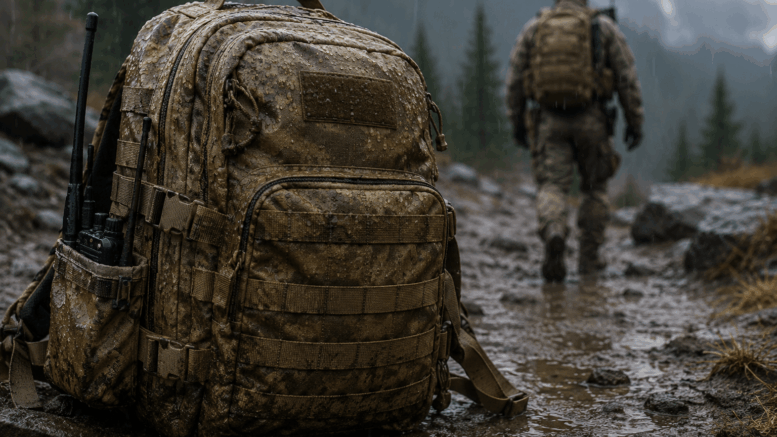
If you’ve ever had gear damaged by rain or wet conditions, you’ve probably wondered: are nylon bags waterproof, or just water resistant?
The short answer is that most nylon bags are considered highly water resistant rather than fully waterproof. But in real-world applications, that distinction matters less than many people think.
There’s a major difference between a backpack that needs to survive rainstorms and muddy field conditions versus a fully submersible dry bag designed for marine environments. Most people searching for “waterproof backpacks” are really looking for a bag that protects equipment during normal outdoor exposure — not a bag designed to sit underwater for extended periods.
In our experience manufacturing custom sewn bags for military, medical, tactical, and industrial applications, properly constructed nylon bags provide more than enough moisture protection for most environments.
In fact, the military has relied on Cordura® nylon bags and backpacks for decades in harsh field conditions. These bags are regularly exposed to rain, mud, transportation, and outdoor operations without requiring fully waterproof construction. The exterior may get wet, but the equipment inside remains protected because the bags are designed with layered construction, coated fabrics, foam padding, and water-resistant assembly methods.
The key is understanding how much water protection your application actually needs.
Are Nylon Bags Waterproof?
In most cases, nylon bags are best described as water resistant, not fully waterproof.
Nylon naturally performs well around moisture, especially when manufacturers use coated materials like PU-coated nylon, ballistic nylon, or Cordura® nylon. These fabrics repel rain and splashes extremely well while remaining lightweight and flexible.
For many applications, that level of protection is exactly what customers need.
However, there’s an important difference between a water-resistant bag and a truly waterproof bag.
A water-resistant bag is designed to protect contents from rain, splashes, and temporary exposure to moisture. A fully waterproof bag is designed to survive prolonged exposure to water or complete submersion.
That difference affects both the materials used and the way the bag is manufactured.
Why Most “Waterproof Backpacks” Are Actually Water Resistant
Many backpacks marketed as waterproof are technically water resistant.
That’s because traditional sewn backpacks contain stitched seams, zipper openings, and fabric joints that can eventually allow water intrusion under heavy exposure.
Even highly water-resistant nylon fabric becomes more vulnerable once thousands of tiny needle holes are introduced during sewing.
For most backpack applications, though, complete waterproofing is unnecessary.
Military, tactical, and industrial backpacks are a great example. We manufacture many bags using Cordura® nylon because it offers an excellent balance of durability, abrasion resistance, flexibility, and water resistance. These bags are routinely used in rainstorms, muddy environments, and demanding outdoor conditions without issues related to moisture protection.
In practical use, properly designed water-resistant backpacks often provide all the protection users actually need while remaining lighter, more flexible, and easier to carry than fully waterproof welded bags.
How Nylon Performs in Backpacks and Carrying Cases
Nylon remains one of the most widely used materials in backpack manufacturing because it offers an excellent balance of durability, flexibility, abrasion resistance, and water resistance.
Unlike fully waterproof vinyl or welded tarp materials, nylon stays comfortable and flexible while still providing strong environmental protection. That’s especially important for tactical backpacks, medical carrying cases, industrial equipment bags, and outdoor gear that must remain easy to transport and use every day.
Most sewn nylon bags also rely on layered construction systems that improve moisture protection beyond the outer fabric itself.
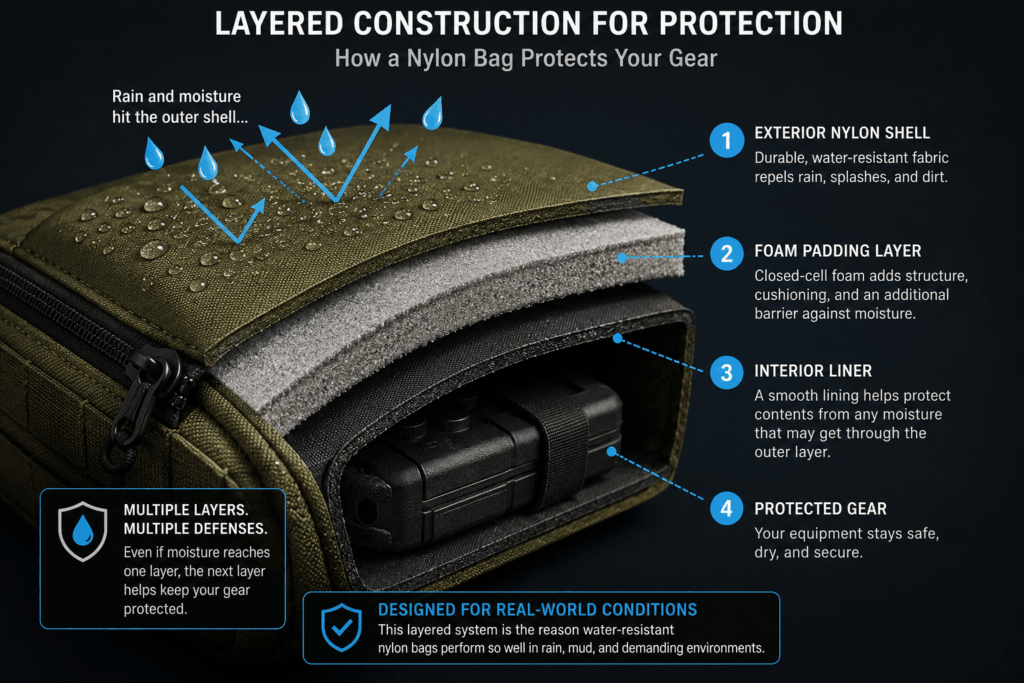
Roughly 95% of the bags we manufacture include:
- an exterior fabric shell,
- foam padding between layers,
- and an interior lining.
That layered design creates additional barriers against moisture intrusion. Even if some water penetrates the outer shell, the foam and interior lining help protect the equipment stored inside.
That doesn’t make a sewn nylon bag completely waterproof, but it does make a properly designed bag far more protective than many people assume.
Why Seams Matter in Water-Resistant Bag Design
One of the biggest limitations of sewn nylon bags is the seams.
Every stitch hole created during manufacturing becomes a potential path for water intrusion. In other words, sewing a bag together effectively punches thousands of microscopic holes into the material.
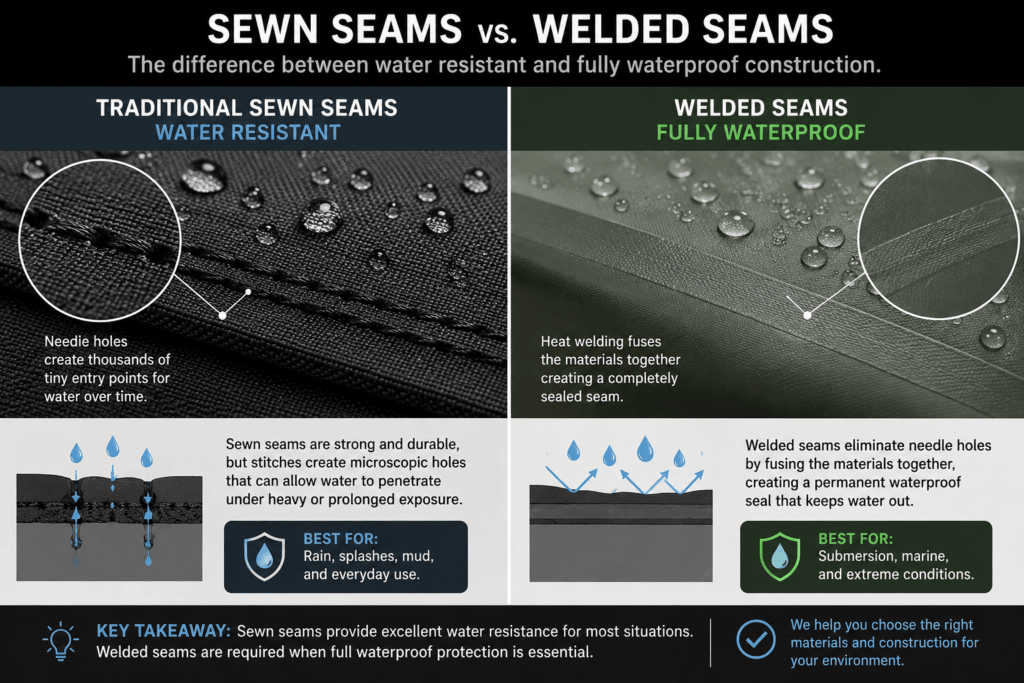
That’s why seam construction matters just as much as the fabric itself.
When we need to improve water resistance in a nylon bag, we often incorporate additional protective features such as seam tape, reinforced stitching, covered zippers, protective flaps, and layered panel designs.
These construction methods can dramatically improve water resistance without requiring fully waterproof welded construction.
For most outdoor, industrial, and tactical applications, this level of protection is more than sufficient.
How We Can Improve Water Resistance in Nylon Bags
Water resistance is not determined by fabric alone. The overall performance of a bag depends on the combination of materials, construction methods, and design features used during manufacturing.
Some of the most important water-resistant design elements include:
- coated exterior fabrics,
- Cordura® nylon,
- water-resistant zippers,
- closed-cell foam padding,
- reinforced seams,
- and interior lining systems.
A properly designed nylon carrying case can provide excellent protection in wet conditions while still remaining lightweight, flexible, and durable.
That balance is one of the main reasons nylon remains so popular in military and industrial applications where equipment protection matters, but complete submersion resistance is unnecessary.
Waterproof Material Comparison
Not all bag materials offer the same level of water protection. Some materials prioritize complete waterproofing, while others prioritize flexibility, durability, and usability.
| Material | Water Protection | Flexibility | Common Applications |
|---|---|---|---|
| Welded TPU/Tarp Material | Fully Waterproof | Moderate | Dry bags, marine gear |
| Vinyl | Extremely Waterproof | Lower | Marine and industrial bags |
| Waxed Canvas | High Water Resistance | Moderate | Outdoor lifestyle bags |
| Cordura® Nylon | Strong Water Resistance | Excellent | Military and tactical backpacks |
| Standard Polyester | Moderate Water Resistance | Good | Everyday consumer bags |
This is why fully waterproof bags often feel stiffer and less flexible than traditional backpacks. Achieving complete waterproofing usually requires sacrificing some comfort and flexibility.
When Nylon Is the Right Material Choice
Nylon is often the best choice when customers need strong durability, lightweight construction, flexibility, and reliable protection against rain and outdoor conditions.
We commonly recommend nylon for:
- tactical backpacks,
- medical bags,
- industrial carrying cases,
- communication equipment bags,
- and outdoor gear.
For these applications, fully waterproof construction is often unnecessary. A properly designed water-resistant nylon bag usually provides the best balance between protection, comfort, usability, and long-term durability.
When You Need a Fully Waterproof Bag
There are situations where standard sewn nylon construction may not provide enough protection.
Fully waterproof bags are often necessary for:
- marine applications,
- boating,
- river crossings,
- prolonged heavy rain exposure,
- or full water submersion.
In these environments, manufacturers often move away from traditional sewn construction entirely and instead use welded seams, roll-top closures, waterproof zipper systems, and non-porous materials like TPU or vinyl.
Unlike sewn seams, welded seams do not create needle holes that allow water intrusion. That’s why dry bags and marine products often feel very different from traditional backpacks.
So, are nylon bags waterproof or just water resistant?
In most cases, nylon bags are best described as highly water resistant rather than fully waterproof. However, for most real-world applications, water resistance is exactly what users actually need.
Military, tactical, medical, and industrial nylon bags have been successfully protecting sensitive equipment in wet environments for decades without requiring complete waterproof construction.
The key is understanding how much water exposure the bag will face and what level of protection the contents actually require.
For most backpacks and carrying cases, properly designed nylon construction offers an excellent balance of durability, flexibility, and moisture protection.