
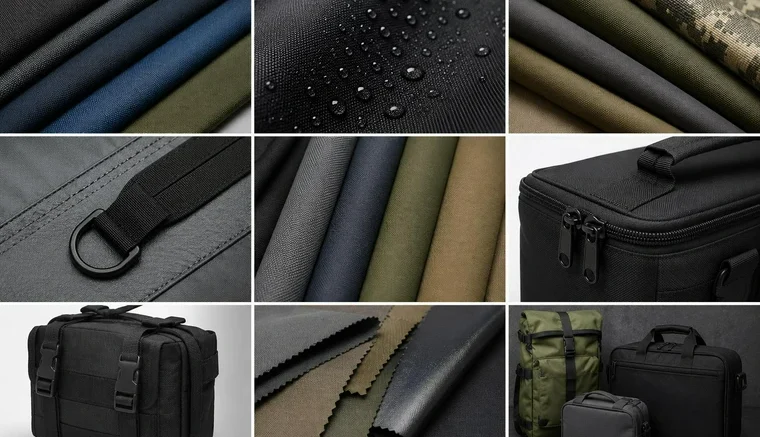
Choosing the right fabric for an industrial sewn product involves more than selecting the strongest material available. A fabric that performs well in one environment may fail in another because of abrasion, UV exposure, chemicals, repeated flexing, temperature changes, or seam construction.
Industrial fabrics are performance-driven textiles used in products such as equipment cases, protective covers, medical bags, straps, pouches, and OEM soft goods components. And in cut-and-sew manufacturing, the material you choose affects durability, maintenance, manufacturability, and long-term product performance.
In this industrial fabrics selection guide, you’ll learn how to assess materials based on real product and manufacturing requirements, so you make fewer sourcing mistakes, run better prototypes, and hand off cleaner specs to production.
Start With the Job, Not the Fabric
One of the biggest mistakes teams make is starting with a material preference instead of the actual performance requirements. Before choosing a fabric, you need to understand what the product needs to do in real working conditions, and what happens when it stops doing that.
Define the Use Case and Failure Modes
Start by asking one honest question: where does this product take the most abuse?
On many sewn industrial products, seams fail before the fabric does, but the fabric still causes many long-term performance issues. Abrasion points wear through, coatings peel, UV exposure leads to cracking, and cold temperatures can make stiff materials brittle. That is why it is important to think through the actual working conditions before reviewing fabric samples.
Some useful questions to work through include:
- Will the product be used indoors, outdoors, or both?
- What temperature range does it need to handle?
- Will it be exposed to chemicals, cleaning agents, fluids, or solvents?
- Where does the product take repeated stress, such as handles, corners, zipper pulls, or contact points?
List the Performance Requirements
Once you understand the failure risks, the next step is writing down exactly what the fabric needs to do. Keep requirements specific, as vague requirements can lead to vague specifications and poor prototype performance.
For example, your list may include requirements such as:
- Must be wipe-clean with standard disinfectants
- Must not pull moisture into foam or padding layers
- Must hold its shape under load without sagging
- Must survive repeated flexing without cracking
- Must not squeak in quiet settings such as labs or clinical spaces
- Must be RF-weldable if seam sealing is required
This list becomes a filter during material selection. If a fabric cannot meet the core requirements, it should not move forward, even if it is familiar or has worked well on a previous product.
Translate Requirements Into Measurable Properties
A requirements list only works if you can tie each point to something you can actually test or verify on a spec sheet. For example, “Durable” tells you nothing, but “Abrasion resistance of 1,000+ cycles per ASTM D4966” tells you everything.
This is also where many product teams get stuck, especially when comparing similar materials. Bringing in a cut-and-sew manufacturer early in the process can help narrow the options faster.
Manufacturers who work with industrial fabrics regularly can identify which properties are important for the application and which ones may add unnecessary cost or production complexity.
Industrial Fabric Types and What They’re Best For
Not all industrial fabrics are constructed the same way, and the construction method changes how the material handles stress, behaves during sewing, and performs over time in real working conditions. Here’s a look at the main fabric types and where each one works best.
Woven Fabrics
Woven fabrics are made by interlacing threads at right angles, which gives them strong structure and good abrasion resistance. They hold their shape under load and work well across most industrial applications, from equipment cases to load-bearing straps.
Cordura and ballistic nylon are both woven fabrics and common choices for custom soft-sided cases. The main tradeoff is limited stretch, so designs that need any give need to account for that early.
Nonwoven Fabrics
Nonwovens are made by bonding fibers together rather than weaving them, which makes them lighter and more affordable. They work well for filtration layers, disposable medical products, and inner liners, but they tear more easily and don’t hold up well under repeated stress or heavy use.
Knitted Fabrics
Knitted fabrics stretch naturally, which makes them useful for medical garments and body-worn products. That stretch is an advantage in the right application, but knits snag more easily, can lose shape under load, and are harder to sew consistently at volume. For products that need to hold a firm structure, woven fabrics are usually the better choice.
Coated and Laminated Fabrics
Coatings and laminations are applied to a base fabric, usually a woven fabric, to add water resistance, chemical resistance, or UV protection. PU and PVC are the most common coating families, and they behave differently in terms of flexibility and cold performance.
Coatings also change how the fabric behaves during production, affecting thread tension and needle hole risk, which is why prototyping with the actual coated material matters.
Composite and Advanced Textiles
Composites combine fabrics, films, foams, or reinforcement layers into a single structure. Advanced materials like Kevlar and Dyneema fall into this category, too. They deliver high performance where standard fabrics fall short, but they cost more and often require specialized equipment to sew correctly. They’re the right call when your specs genuinely require them, not as a default upgrade.
How to Read a Fabric Spec Sheet and What to Request
Once you have your performance requirements written down, the next thing to do is find fabrics that can actually meet them. That means learning how to read a spec sheet and knowing what to ask for when one is not provided.
Fiber and Base Material
The fiber type tells you a lot about how a fabric will perform before you even review the rest of the specification. Nylon and polyester are the two most common base materials used in industrial sewn products, and both have different strengths depending on the application.
Here’s how the two compare
| Property | Nylon | Polyester |
| Abrasion resistance | Higher | Slightly lower |
| Moisture absorption | Absorbs some moisture | Very low absorption |
| UV performance | Degrades faster | Holds up better |
| Cost | Higher | More affordable |
| Best for | Cases, bags, military & tactical soft goods | Outdoor products, UV-exposed applications |
Neither material is automatically better than the other. The right choice depends on the working environment and how the product will be used.
Construction Details That Affect Performance
Beyond the fiber type, fabric construction changes how the material behaves during production and in real-world use. Several details are worth reviewing closely:
- Weave type affects abrasion resistance and how the material handles needle penetration during sewing
- Denier refers to the thickness of the individual threads. Higher denier fabrics are usually heavier and more abrasion-resistant, but they also add weight
- Stretch direction and bias behavior become important for products with curved panels or close-fitting shapes
- Dimensional stability affects how much the fabric shifts, stretches, or distorts after cutting, washing, or repeated stress
Weight, Thickness, and Width
These properties affect both product performance and manufacturing efficiency. Fabrics that are too heavy can add unnecessary bulk and make clean seam construction more difficult. On the other hand, materials that are too thin may not support stitching well under repeated load.
Width also affects material efficiency during production. Narrower rolls can create more waste and increase material costs, particularly at higher production volumes. Thickness should also be reviewed early if the product has tight tolerances or layered panels that need to fit together cleanly.
Finishes, Coatings, and Laminations
This is often where fabric specifications become more detailed, and where many sourcing problems begin. A few areas worth reviewing include:
- Coating type — PU coatings are generally more flexible and tend to perform better in cold temperatures than PVC, which can stiffen or crack over time
- Coating weight — heavier coatings provide more protection but may also increase stiffness
- Cold crack rating — important for products stored or used in low-temperature conditions
- Seam sealing compatibility — some coated fabrics require seam sealing to maintain water resistance, and not all coatings react the same way to seam tape
If a supplier cannot provide this information clearly upfront, it is worth paying attention before moving forward with a large material order.
A Repeatable Fabric Selection Workflow
Step 1: Write the Requirements Brief
Before reviewing fabric samples, document what the material needs to do. Include the use environment, temperature range, chemical exposure, load requirements, and any compliance needs. Even a short one-page brief can reduce sourcing confusion later.
Step 2: Shortlist Three to Five Candidate Fabrics
Use the requirements to narrow the options down to a manageable group of candidate fabrics. Start with the environment, then durability, then cost. If two materials meet the performance requirements, the easier one to source consistently is usually the better option.
Step 3: Request Samples and Run Basic Tests
Request fabric samples and run practical hands-on checks such as abrasion rub tests, flex tests, wipe-clean tests, and cold testing if low temperatures are involved. It is also important to test the actual seam construction planned for production instead of testing the fabric on its own.
Step 4: Prototype With Real Construction and Hardware
A prototype only provides useful feedback if it is built the same way as the final product. Use the actual coated fabric, hardware, reinforcement, and seam construction planned for production.
This is also where working with an experienced prototype sewing partner becomes valuable. Manufacturing issues are much easier to fix during prototyping than after production begins.
Step 5: Confirm Production Readiness
Before moving into production, confirm the approved spec ranges, color options, lead times, and material alternates. It is also important to verify that suppliers can meet production volumes consistently and provide repeatable material quality across future orders.
Common Fabric Selection Mistakes
Even with a solid requirements brief, a few common mistakes can derail a good fabric choice. Watch out for these:
- Over-optimizing for one property: Chasing a single spec often creates problems elsewhere. A fully waterproof coating that stiffens in cold weather will crack under repeated flexing. A high-denier fabric that’s too heavy will stress seams and hardware over time. Balance your requirements against each other.
- Ignoring seams and construction: A fabric can pass every test and still produce a product that fails in the field if the seam construction isn’t right. Thread choice, stitch density, seam type, and reinforcement at stress points all affect long-term durability. Factor these in early, not after the first prototype fails.
- Choosing a fabric that’s hard to source consistently: Lot-to-lot variation in color, coating weight, or finish creates visible inconsistencies across production batches. Before you finalize a material, confirm lead times, minimum order quantities, and whether an approved alternate exists.
Example Fabric Recommendations by Use Case
| Use Case | Best-Fit Fabric Families | Key Properties | What to Test | Common Failure Mode |
| Protective covers and equipment cases | Coated nylon, PU-laminated polyester | Abrasion resistance, water resistance, cold flexibility | Flex testing, wipe-clean testing, cold crack testing | Coating delamination |
| Soft-sided carrying cases for OEM equipment | Ballistic nylon, Cordura, coated polyester | Shape retention, seam strength, abrasion resistance | Stitch testing, abrasion rub testing | Seam pullout around hardware points |
| Medical wearables and regulated environments | PU-coated fabrics, nonwoven liners | Wipe-clean performance, fluid resistance, documentation support | Disinfectant compatibility, wipe-clean testing | Surface degradation after repeated cleaning |
| Military and tactical soft goods | Mil-spec nylon, Berry-compliant fabrics | Abrasion resistance, tear strength, load durability | Abrasion testing, seam strength testing | Stress-point seam failure |
Why an Industrial Sewing Manufacturer Improves Fabric Selection
Most fabric selection problems don’t come from bad materials; they come from making material decisions without thinking about how the product will actually be made. Getting your sewing manufacturer involved early changes that. Here’s what that looks like in practice.
Material Decisions Get Easier When Manufacturing Is Involved Early
A manufacturer who works with industrial fabrics daily knows how different materials behave under a needle, how coatings respond to heat sealing, and where a pattern design will create stress points that the fabric needs to handle.
That input during prototyping saves you from locking in a material that works in isolation but causes problems at production scale. It also speeds up the transition from sample to repeatable production run, which matters when timelines are tight.
What Fieldtex Cases Brings to Fabric Selection and Production
Fieldtex works with a wide range of industrial fabrics across medical, military, and industrial applications, including mil-spec, Berry-compliant materials, PU-coated fabrics, and heavy ballistic nylon.
Our facility runs industrial machines built for heavy-duty materials, and our team has hands-on experience with the full process, from soft goods design and engineering through to high-volume production. That range means fabric recommendations come from real production experience.
What to Send When You Request a Quote or Prototype
The more context you provide upfront, the faster and more accurate your quote will be. When you reach out, include:
- A description of the use case and environment
- Target quantities and timeline
- Any compliance requirements (FDA, Berry Amendment, mil-spec)
- Preferred or candidate fabrics if you have them
- Drawings, sketches, or reference samples
- Target weight and any dimensional constraints
Frequently Asked Questions About Industrial Fabric Selection
Industrial fabrics are performance-driven textiles selected for durability, protection, and consistent manufacturing, and not appearance. Common examples include the fabrics used in equipment cases, protective covers, load-bearing straps, and medical soft goods.
It depends on the application. Nylon offers better abrasion resistance and a softer hand, making it a strong choice for products that take surface wear. Polyester absorbs less moisture, holds up better under UV exposure, and costs less. If the product will be used outdoors or in wet conditions, polyester is usually the better starting point. If abrasion resistance is the priority, nylon wins.
At minimum, ask for fiber type, construction method, denier, weight in GSM or oz/yd², thickness, width, coating or lamination type, key test results, color tolerances, and available alternates.
Run an abrasion rub, a flex test, a wipe-clean test, and a cold test if low temperatures are part of the use case. Also, do a stitch test using your actual seam construction and not just the fabric on its own.
Coatings change needle selection, affect thread tension, and can leave needle holes that compromise water resistance if seams aren’t sealed. They also introduce delamination and cold crack risk. Always prototype with the real coated fabric, not a plain substitute.
Seam failure usually comes down to thread choice, stitch density, seam type, or lack of reinforcement at stress points. Hardware attachments, D-rings, and zipper ends are common failure locations because stress concentrates there. Pattern design also plays a role since a well-designed pattern distributes load more evenly across the seam.
Look for suppliers who can provide lot-to-lot consistency in color, coating weight, and finish. Confirm lead times, minimum order quantities, and whether an approved alternate material exists before you finalize your spec.
The earlier the better, especially if your product has strict performance requirements, multiple layers, coatings, or hardware. Fieldtex can help validate whether a fabric is manufacturable during prototyping and flag potential production issues before they show up at scale. You can explore our manufacturing capabilities or request a quote directly to get started.