
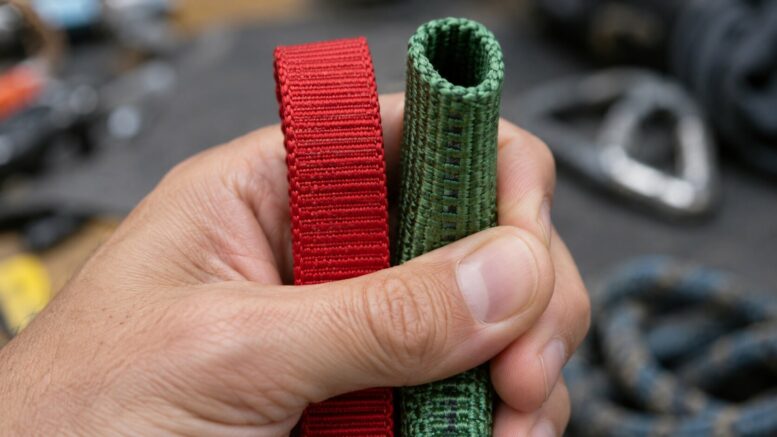
| TL;DR: Flat webbing is a solid, single-layer weave that stays rigid under a steady pull. It’s the right base for luggage straps, tie-downs, and buckle attachment points. Tubular webbing is a hollow, two-layer weave that flexes and absorbs shock, and its open channel can route cord, wire, or cable through the strap itself – the right choice for safety harnesses and fall protection. |
|---|
Picking a custom strap is as simple as you probably imagine. But it does involve two important choices. Quite commonly, many buyers in this market only focus on one, often resulting in a poor solution.
That first choice is the most obvious – what type of material to select – with nylon or polyester dictating how strong the strap is and how well it copes with sun, water, and wear. The second choice is the way it is constructed (tubular or flat webbing).
When a buyer asks us about tubular webbing vs flat webbing, they are really asking about that shape, as we will explain in this guide. We will also cover what each one is good for and how they compare, so you can pick the right one for the job.
If you are looking to spec gear in the medical, military, and industrial fields, and can’t decide between tubular or flat webbing, this quick guide will help.
Key Takeaways
- Flat webbing is a solid, single-layer weave with minimal stretch, built to hold a steady load without creeping.
- Tubular webbing is a hollow-core, two-layer weave that flexes and cushions a sudden load.
- Tubular webbing’s open channel can route cord, wire, or thin cable through the strap itself; flat webbing cannot.
- Flat webbing feeds flush into buckles, sliders, and stitched joints, making it the standard for finished hardware points.
- Tubular webbing is the standard build for safety harnesses and fall-protection gear, where give at the point of impact matters.
- Material (nylon vs. polyester) and construction (flat vs. tubular) are decided independently – never traded one against the other.
What Makes Flat Webbing Different
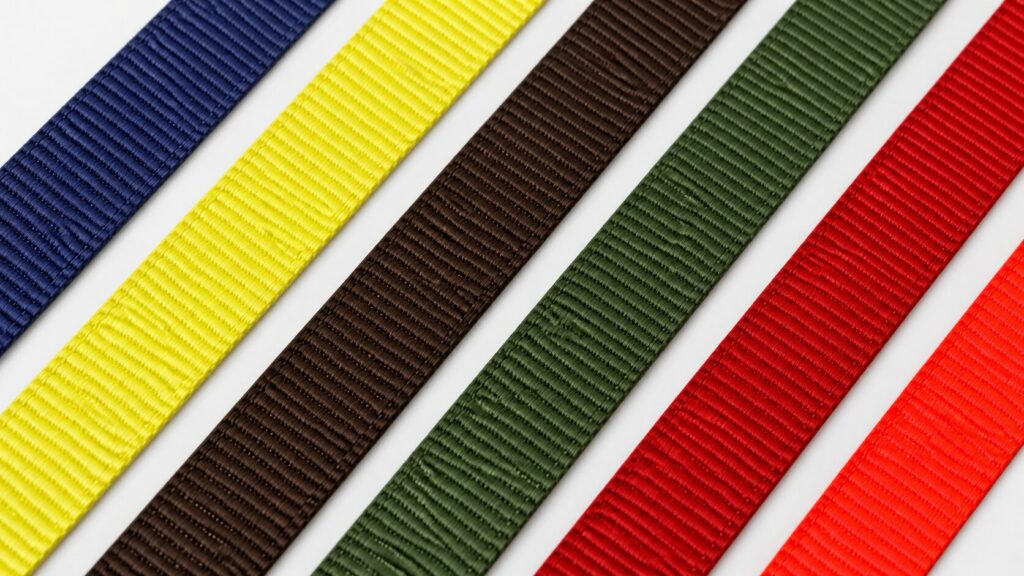
Flat webbing is the type most people think of when they think of a strap. Its solid, even weave is what gives it the stable, no-nonsense feel that so many load-bearing jobs require.
How Flat Webbing Is Built
Flat webbing is a solid weave in a single layer. The yarns sit tight and flat, so the strap keeps the same shape from the first yard of a run to the last. There is no hollow core and very little give, handling load the same way each time, which is why flat webbing shows up in so much load-bearing work.
Where Flat Webbing Wins
Flat webbing barely stretches, which is rather the point. It keeps its shape under tension and holds a load right where you put it. It also lies flush against hardware, so it feeds into buckles, sliders, and stitched joints without bunching up.
That makes it the most common choice to sew into finished custom straps and joints, often seen on luggage and cargo straps, tie-downs that must not stretch, and buckle points that need a flat, stable base. When a strap has to hold its shape and take load again and again, flat webbing is the place to start.
What Makes Tubular Webbing Different
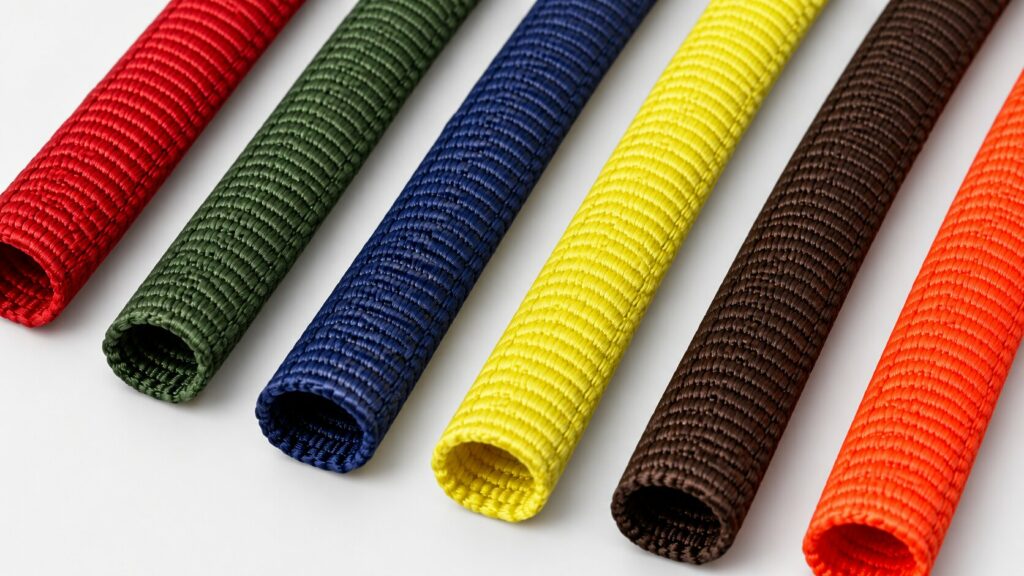
You might describe tubular webbing as the specialist of the two, built as a hollow tube rather than a solid band. That single change in shape is what lets it flex, cushion a load, and carry a line through its core.
How Tubular Webbing Is Built
Tubular webbing is woven as a hollow tube, not a flat band. It has two layers joined at the edges, with an open channel running down the middle. That round shape changes how it acts under load. It flexes more, and it can do one thing flat webbing cannot – it opens up along the channel.
Where Tubular Webbing Wins
The hollow core gives tubular webbing a soft, springy give that a solid weave lacks. Pull on it hard, for example, and the tube squashes. That takes some of the force out before it runs down the strap.
Two jobs drive most tubular orders, with the first being routing, as the inner channel can carry cord, wire, or thin cable through the strap itself, kept safe and out of sight. The second is a moving load, where a strap has to flex and soak up force.
That is why you see tubular webbing most commonly in safety harnesses and fall gear, because a bit of give at the point of impact does real work.
Flat vs. Tubular Webbing at a Glance
Here is flat webbing vs tubular webbing side by side. Both can be woven from nylon or polyester, so keep the material choice apart from the build.
| Property | Flat Webbing | Tubular Webbing |
|---|---|---|
| Construction | Solid, single-layer weave | Hollow-core, tube weave |
| Stretch | Minimal | More flex, shock-absorbing |
| Ease of sewing | Feeds flat into hardware | Hollow profile needs different handling |
| Best fit | Load stability: luggage straps, tie-downs, buckle attachment | Dynamic flex: harnesses, fall protection, internal cord routing |
How to Choose Construction for Your Application
Once you know how the strap has to behave in the field, the right choice is usually fairly obvious.
Take a cargo tie-down or a luggage strap, for example. It has to hold its length and shrug off stretch while a steady load hangs on it, and that is flat webbing to a tee. What you sew is what carries the weight, with no creep to worry about later. The same thinking covers buckle and hardware points, where a flat, stable base keeps the joint clean under stress.
That is also where good seam engineering pays off, because a stitch line is only as true as the webbing feeding into it.
Now swap that steady load for a sudden one. A safety harness or a piece of fall gear has to give at the moment you need it to, softening the jolt rather than passing it straight to the body, and that is squarely tubular territory. Tubular also wins the moment a strap has to double as a conduit, running cord, wire, or cable through its core, because flat webbing simply has nowhere to put the line.
That said, the build is only part of the spec. Nylon versus polyester is a separate call from tubular vs flat webbing, and the two get decided together, never traded one for the other. Flat nylon, tubular polyester, or any pairing the job asks for, so long as the material and the shape both suit the load.
How Fieldtex Builds Both Constructions
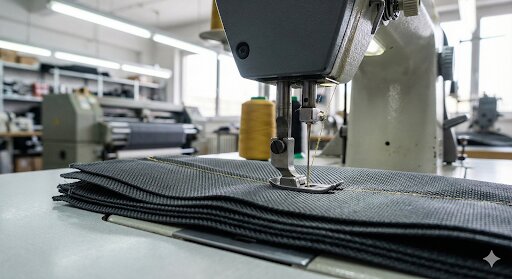
At Fieldtex, we pick the build around how the strap has to work in the finished product, not around what is cheap to buy or what the last job used.
We have sewn both flat and tubular webbing into bags, handles, and hardware points across military, medical, and industrial gear. We know how each one feeds, folds, and holds under the needle. That is what keeps a good spec from going wrong on the floor.
Tell us how your strap has to work, whether that is a steady hold or a moving load. Our team will help you pick the right build and the right material together, before your first run.
Need help deciding between flat webbing and tubular webbing? Contact Fieldtex for a quick chat, and we can quickly advise the best solution for you.
FAQs: Flat vs. Tubular Webbing
Flat webbing is a solid weave in one layer, built to stay stable and hold a load. Tubular webbing is a hollow weave, built to flex and soak up force. Flat webbing keeps its shape under a steady pull, while tubular webbing gives a little under a sharp one, and it has an open channel down the middle. So tubular webbing vs flat webbing comes down to one key distinction: Do you want a strap that stays firm, or one that flexes and can carry a line inside?
Not on raw pull strength alone, no. Strength leans far more on the material and the width of the strap than on the build, so a wide flat nylon strap can out-pull a thin tubular one, but what tubular webbing adds is flex and give. It softens a sharp load instead of passing it straight through. If you need peak strength, start with the nylon and polyester choice and the strap width. If you need to soak up force, tubular has the edge.
Yes, the hollow core is often used to run cord, wire, or thin cable through the strap itself. Flat webbing cannot do this. The line stays safe inside the weave and out of the way. That is one big reason teams pick tubular webbing when a strap has to carry a signal or power line too.
Tubular webbing is the best option for harnesses and fall gear, because its flex soaks up a sudden load better than a flat, stiff weave. When a fall stops short, that give takes some of the shock out of the load. Flat webbing still has a place in the steady, load-bearing parts of a harness. But for the parts that must soak up a moving load, tubular webbing wins.
Written by the team at Fieldtex, where we have sewn custom webbing straps in the USA since 1973. Need flat or tubular webbing built into your product? Talk to us about your next run.