
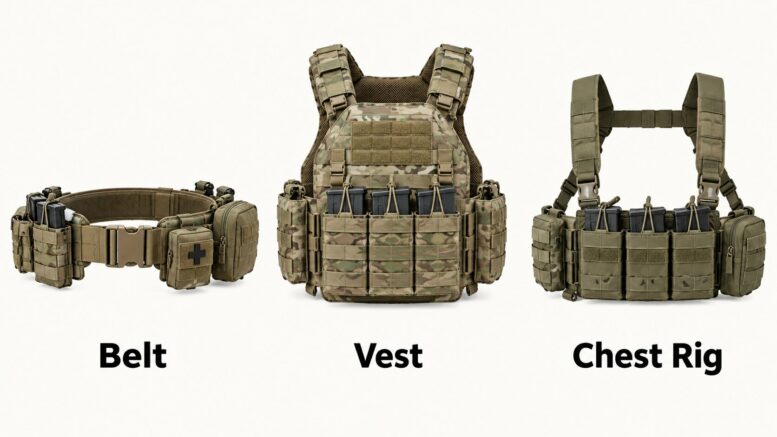
Load-bearing equipment, or LBE, is the umbrella term for any system built to carry gear on the body instead of in a bag or backpack. A battle belt, a plate carrier, and a chest rig aren’t three competing answers to the same question, but three different answers to it: where does the weight go, and how fast can you get to it.
This guide breaks down what each system is actually built for, how they compare on carry position, capacity, and mobility, and how most loadouts end up combining more than one rather than picking a single “best” option.
Whether you’re a law enforcement, military, or EMS buyer outfitting a loadout, or a procurement team sourcing custom gear, the goal here is the same: understand the tradeoffs before you spec anything.
Key Takeaways
- Load-bearing equipment (LBE) is the umbrella term for any body-worn system, namely belts, vests, chest rigs, and harnesses, built to carry gear on the body instead of in a bag.
- A battle belt carries gear at the waist, stays clear of the torso, and works standalone or as a first-line layer under a vest or chest rig.
- A plate carrier or vest is the only one of the three built to hold body armor, which makes it the piece that usually decides whether armor is part of the loadout at all.
- A chest rig carries gear only, with no armor pockets, and it’s chosen when mobility and low profile matter more than ballistic protection.
- Most loadouts combine systems rather than choosing one: a belt for first-line essentials, a plate carrier for armor, and a chest rig layered over or under, depending on the mission.
- The starting point comes down to one question: Does the role require body armor? That single answer narrows the choice fast.
What “Load-Bearing Equipment” Actually Means
Load-bearing equipment covers any body-worn carry system designed to move weight off the hands and distribute it across the body. The point is speed and mobility: gear staged on the body is faster to reach and doesn’t shift the way a bag does when you’re moving.
The three systems below sit on a spectrum from waist-level to torso-centered carry, and each one solves a slightly different problem. Understanding where each fits is the first step in building a loadout instead of just buying pieces.
Battle Belt: Waist-Level Carry
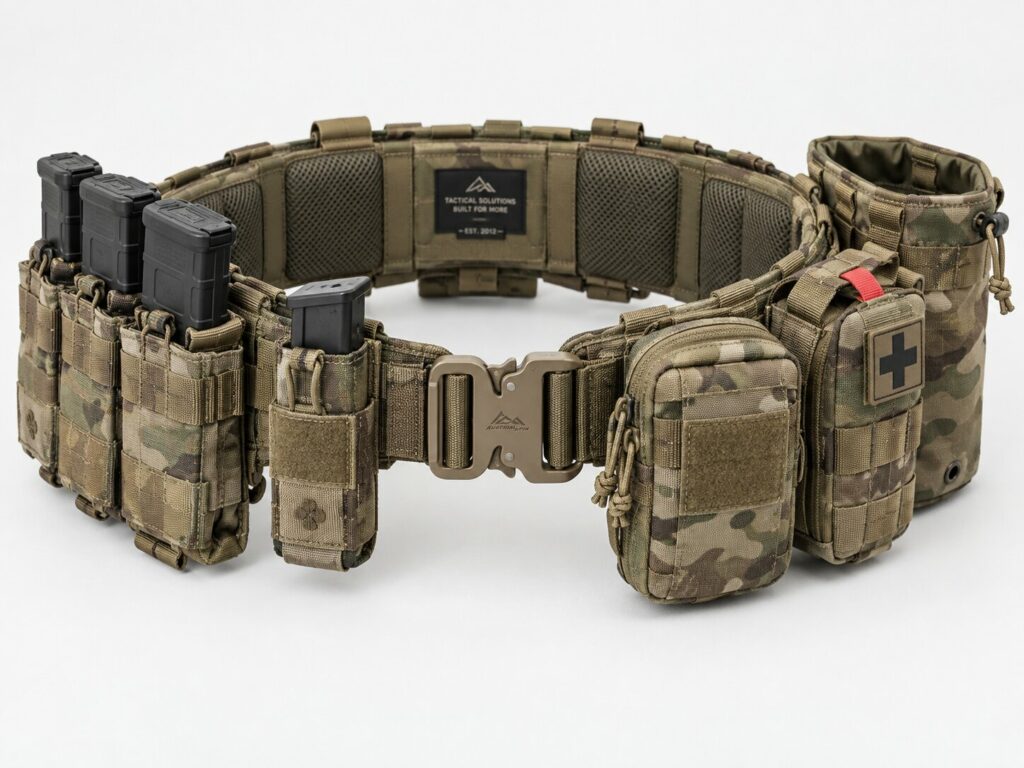
A battle belt keeps gear at the waist, off the torso, and is typically built with MOLLE webbing for modular pouch attachment. Because it sits at the hips rather than the chest, it stays clear of whatever gets layered on top, such as a plate carrier, a chest rig, or nothing at all.
Waist-level carry is fast to reach by design. Magazines, a sidearm, a medical pouch, and communications gear can all sit on a belt without competing for space on the torso. That makes it a strong standalone option for roles that don’t require armor, and a natural first line in a multi-system loadout where a vest or chest rig gets added on top.
Plate Carrier or Vest: Structured, Armor-Compatible Carry
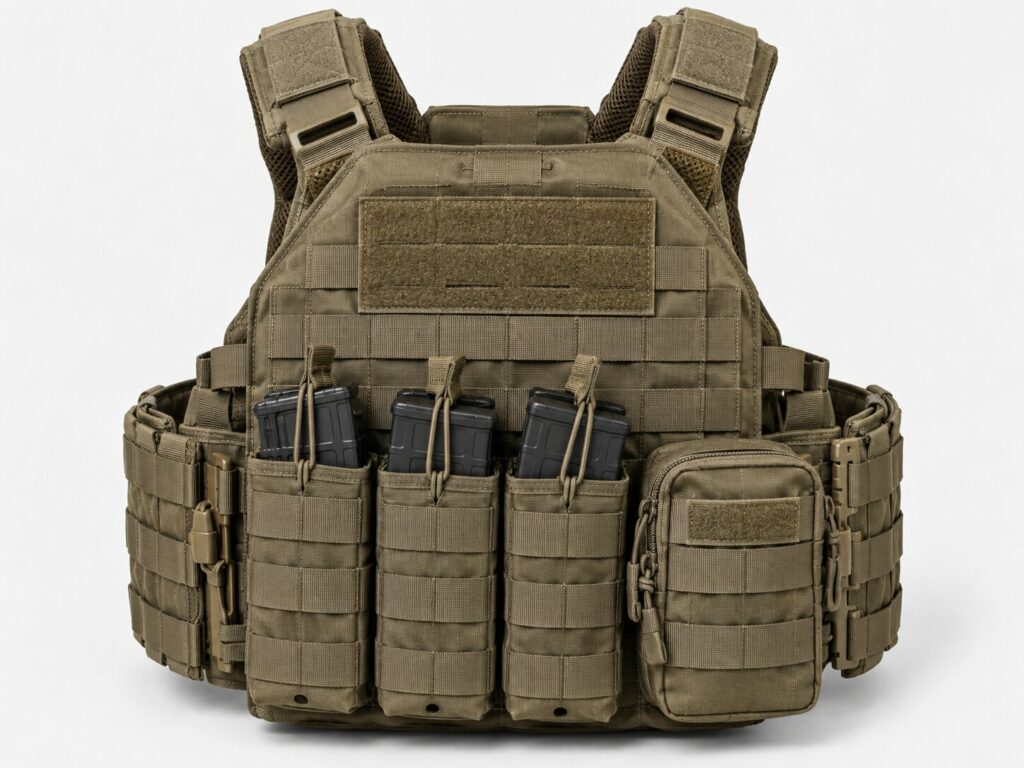
A plate carrier or load-bearing vest is a structured system typically built to hold body armor plates, with MOLLE or PALS webbing added for supplementary pouches. Unlike a belt, it centers weight on the torso and shoulders, which changes both the carry capacity and the fatigue profile over a long shift or patrol.
The plate carrier is usually the piece that decides whether armor is part of the loadout in the first place, and everything else gets built around that choice. Worth noting: armor compatibility is a separate spec decision from the carry system itself. Whether a given plate carrier accepts soft armor, hard plates, or both is a materials-and-fit question that comes after you’ve decided torso-centered carry is the right starting point.
Chest Rig: Carry Capacity Without Armor
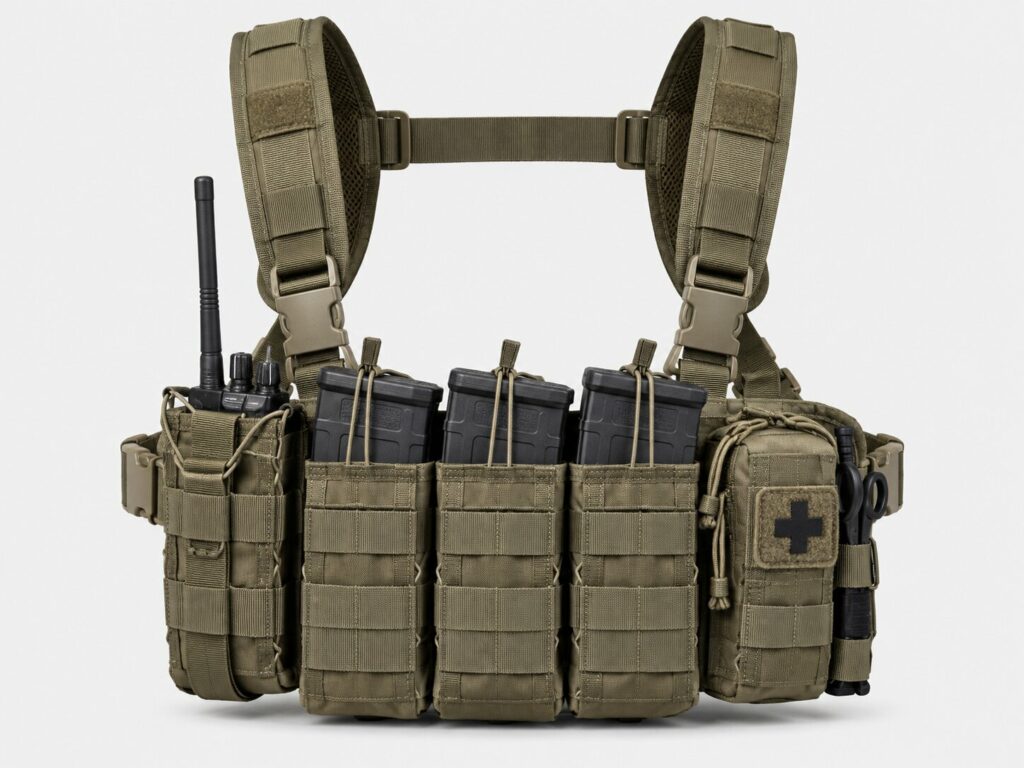
A chest rig is a lightweight, harness-based system designed solely for carrying magazines, radios, and medical gear, with no armor pockets. It sits on the chest rather than the waist or shoulders, and it’s built to be worn with or without another layer underneath.
Teams choose a chest rig when mobility and low profile matter more than ballistic protection: training days, patrol roles, or any situation where armor is carried separately or isn’t required at all. Because it skips the plate pockets entirely, it’s lighter and less restrictive than a vest, which is exactly the tradeoff it’s designed around.
Need Custom Load-Bearing Gear?From tactical belts and chest rigs to MOLLE vests and specialized pouches, Fieldtex manufactures durable sewn products built around your specifications. Our team handles design, prototyping, heavy-duty sewing, and production in-house.Discuss Your Project |
|---|
Belt vs. Vest vs. Chest Rig at a Glance
The three systems break down by carry position, armor compatibility, and use case:
| System | Carry Position | Armor Compatible | Best Fit |
|---|---|---|---|
| Battle belt | Waist/hips | No | Fast access, keeps torso clear, standalone or first line |
| Plate carrier/vest | Torso/shoulders | Yes | Loadouts where body armor is part of the mission profile |
| Chest rig | Chest, harness-based | No | Mobility and low profile without armor weight |
How These Systems Work Together
In practice, these three systems are rarely an either/or choice. A battle belt often serves as the first line; even when a vest or chest rig gets worn on top of it, the belt handles the essentials that need to stay accessible no matter what else is layered on.
A chest rig can replace a vest entirely when armor isn’t part of the mission, or it can be worn underneath one when it is. Some loadouts run all three: belt for first-line gear, plate carrier for armor and primary capacity, chest rig for a lighter secondary layer when the plate carrier comes off.
The right combination depends on the mission profile, the environment, and how much weight a person can carry for the length of the shift, not on which single system ranks “best.”
Choosing a Starting Point for Your Loadout
A few questions narrow the decision fast:
- Does the role require body armor, or is mobility the priority? This alone usually decides between a plate carrier and a chest rig.
- How much gear needs to be carried, and how fast does it need to be reached? Higher gear counts push toward a belt-plus-vest combination; lighter loads favor a chest rig alone.
- Will this be worn standalone, or layered with other systems? A chest rig built to layer under a plate carrier needs a different profile than one meant to stand alone.
- What’s the environment? Extended field use, vehicle-based operations, training, and patrol all put different demands on comfort, ventilation, and weight distribution.
Answering these before ordering gear cuts down on mismatched systems that don’t actually work together once they’re on the body.
How Fieldtex Builds Custom Load-Bearing Equipment
We manufacture custom battle belts and plate carriers, with MOLLE-compatible construction across all three system types. Every build starts with how the gear will actually be worn and loaded, not a generic template resized to fit.
That means reinforced stitching at load points, bar-tacking at stress points where webbing attaches to the base fabric, and material selection matched to the mission: 1,000-denier Cordura for high-abrasion contact points, lighter technical laminates where weight matters more than durability.
We build to the loadout, not the other way around. Our soft goods design and engineering process works through fit, weight distribution, and modularity before a single stitch goes into production.
Tell us what your loadout needs to carry and how it’ll be worn. Our team can help you spec the right system, or combination of systems, before your first production run.
FAQs: Load-Bearing Equipment
LBE stands for load-bearing equipment, the umbrella term for any body-worn system built to carry gear. It covers belts, vests, chest rigs, and harnesses; anything designed to move weight off the hands and distribute it across the body for faster access.
No, a chest rig carries gear only and has no armor pockets, while a plate carrier is built specifically to hold body armor plates. They sit in similar positions on the torso, but they solve different problems: capacity versus protection.
Yes, and it’s a common combination. The belt handles first-line essentials at the waist, while the chest rig adds carry capacity up top without adding armor weight. Many loadouts run both alongside a plate carrier.
It depends on whether armor is part of the mission profile. If yes, start with the plate carrier and build around it. If not, a battle belt, chest rig, or both typically comes first, depending on how much gear needs to be carried.