
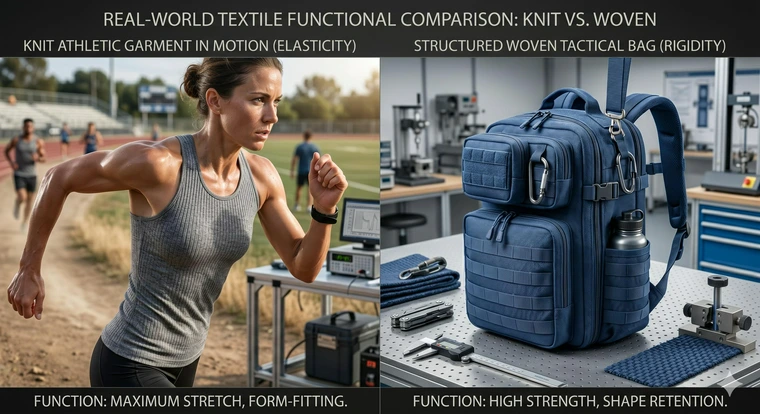
The difference between knit and woven fabric isn’t just a matter of how something looks on a bolt — it determines how a finished product performs under load, repeated use, and environmental stress. For procurement managers and product engineers sourcing custom soft goods, choosing the wrong fabric construction can compromise fit, durability, and regulatory compliance in equal measure.
Whether you’re developing a medical carry bag, a tactical pouch, or an industrial equipment case, understanding knit vs. woven from a technical standpoint is where the decision-making has to start.
Understanding the Basics: Knitted Fabric Meaning vs. Woven
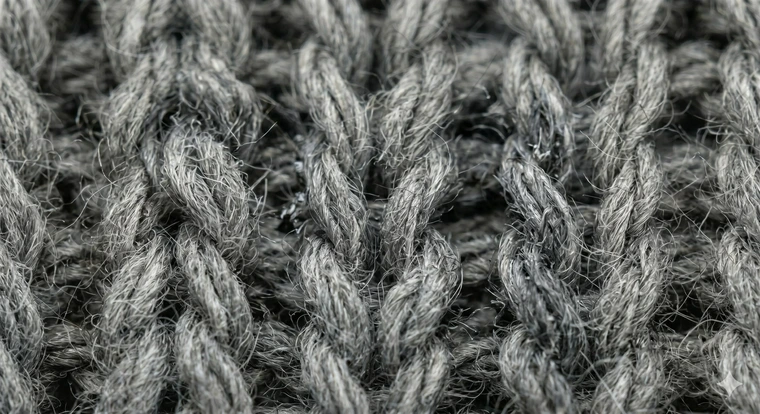
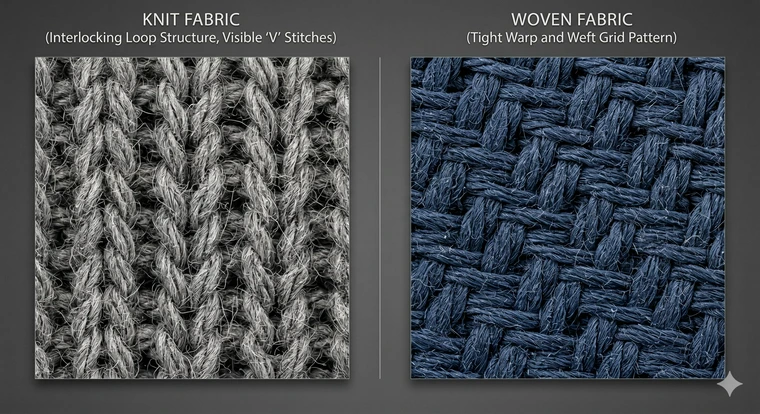
Knitted fabric is built from a single continuous yarn that forms interlocking loops. Each loop passes through the one before it, creating a flexible, interconnected structure. Pull one direction and the loops shift; release and they recover. Think of a hand-knit sweater; the entire structure is one yarn, moving together.
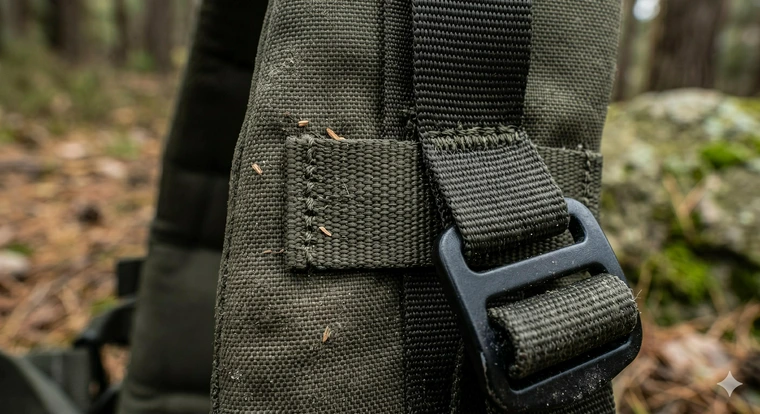
Woven fabric works on an entirely different logic. Two distinct sets of yarns — the warp (running lengthwise) and the weft (running crosswise) — are interlaced at right angles on a loom. The result is a dimensionally stable grid. A window screen is a reasonable analogy: rigid intersections, predictable geometry, minimal give.
These two construction methods produce materials with fundamentally different mechanical properties, and that distinction matters long before a pattern is cut.
How Is Weaving Different from Knitting? (Comparison Table)
| Property | Knit Fabric | Woven Fabric |
| Construction Method | Interlocking loops from a single yarn | Warp and weft yarns interlaced at right angles |
| Tools Required | Knitting needles or knitting machines | Loom |
| Stretch | High — stretches in multiple directions | Low — minimal stretch, especially on-grain |
| Edge Behavior | Loops curl or unravel if cut raw | Frays at cut edges unless finished |
| Dimensional Stability | Lower — shape can distort under stress | Higher — holds form under load |
| Abrasion Resistance | Moderate — depends on yarn fiber | Generally higher — tight weave resists surface wear |
| Typical Applications | Apparel, medical compression garments, athletic gear | Tactical gear, equipment cases, structured bags |
Key Performance Differences: Knit vs. Woven
Elasticity and Stretch
The loop structure of knit fabric allows it to elongate in multiple directions and return to its original shape. This makes it the right choice for any application where the material needs to conform — medical wearables, compression sleeves, or garments designed to move with the body.
Woven fabrics offer very little stretch on-grain (along the warp or weft), and only modest give on the bias. Where structure matters more than movement, that rigidity is an advantage, not a limitation.
Breathability and Temperature Regulation
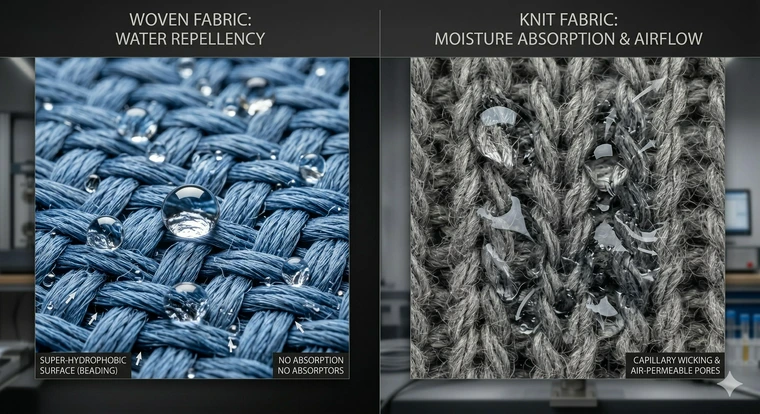
The open-loop architecture of knit fabrics creates air channels that woven constructions simply don’t replicate. A jersey knit allows far more airflow than a poplin weave at the same weight class. Conversely, tightly woven fabrics — particularly those using high-denier yarns — can be engineered to block wind and resist water penetration, which is why wovens dominate in weatherproof equipment cases and tactical shell fabrics.
Wrinkle Resistance
Knit fabrics resist creasing because the loops absorb stress and spring back. Wovens, especially those with tight interlacing like plain weaves, hold a crease once formed. In apparel, this is a style consideration. In technical soft goods, it becomes relevant when a panel needs to maintain its shape across repeated packing and unpacking cycles.
Durability and Longevity
Woven fabrics generally outperform knits on abrasion resistance and tensile strength. A plain or twill weave creates a denser surface that resists surface wear more effectively than an open loop structure of equivalent yarn weight.
This is why heavy-duty sewn goods (load-bearing bags, equipment cases, military pouches) are almost always built from woven constructions. The geometry of interlaced yarns distributes stress across multiple points simultaneously.
How to Tell the Difference: The 3-Step Test
When you receive a fabric sample and need to identify its construction quickly, these three tests get you there without equipment.
- The Stretch Test: Pull the fabric lengthwise, then crosswise, then diagonally. Knits stretch significantly in at least two directions. Wovens resist on-grain and give only modestly on the bias. If it moves easily in both directions, it’s knit.
- The Edge Test: Look at a cut edge under moderate lighting. Woven fabrics fray — individual warp and weft yarns separate and pull away. Knit edges curl toward the face of the fabric or, in loosely constructed knits, individual loops begin to unravel. Fraying threads indicate woven; curling or looping indicates knit.
- The Magnification Test: A 10x loupe or a macro phone lens is enough. Knit fabric shows a distinctive “V” or “U” stitch pattern; interlocking loops visible in vertical columns called wales. Woven fabric shows a classic checkerboard or diagonal grid depending on the weave type (plain, twill, satin). The difference is unambiguous at any magnification above 5x.
Common Examples in Your Wardrobe
Popular Knit Fabrics
Jersey (the fabric in most cotton T-shirts) is the most familiar knit construction; a single-needle structure with a smooth face and a looped back. French Terry uses a similar base but pulls extra yarn into loops on the back surface for added weight and absorption.
Sweaters and technical base layers are typically either circular-knit or flat-knit constructions, depending on the gauge and end application. Leggings and compression garments rely on the knit’s multi-directional stretch to conform without restricting blood flow.
Popular Woven Fabrics
Denim is a 3×1 twill weave — the weft yarn passes under three warp yarns before crossing over one, creating the diagonal rib visible on the face of any pair of jeans. Poplin (used in dress shirts and lightweight medical scrubs) is a plain weave with a fine weft yarn that produces a smooth, tight surface.
Sateen weaves float the weft yarn over multiple warps, reducing interlacing points and creating the lustrous surface familiar in bedding. In technical textiles, ripstop nylons and ballistic weaves are woven constructions engineered specifically for tensile and tear resistance.
Technical Measurements: Denier and Thread Count
Denier measures the linear mass density of a fiber, specifically, the mass in grams of 9,000 meters of a single yarn. A higher denier indicates a heavier, thicker yarn. Thread count measures the number of warp and weft threads per square inch in a woven fabric. Both metrics appear in technical specifications, but they don’t translate directly across construction types.
A 1,000-denier knit and a 1,000-denier woven fabric use yarn of the same weight, but the finished materials will perform very differently. 1,000-denier Cordura, a woven nylon, produces a dense, abrasion-resistant surface used in load-bearing military gear and custom equipment cases.
A 1,000-denier knit using comparable yarn would be heavier and less breathable than lower-denier knit alternatives, and would likely not achieve the same surface hardness or cut resistance. Denier tells you about the yarn; construction tells you how that yarn will actually perform as a material.
Ballistic nylon, another woven construction, uses a 2×2 or 2×3 basket weave variant that increases the cross-section of yarn at each interlacing point, improving tear propagation resistance without a proportional weight increase. That performance outcome comes from weave geometry, not denier alone.
How to Choose: Which Fabric Is Right for Your Project?
The right construction depends on what the finished product must do, not on what materials are familiar or readily available.
Choose knit fabrics when: the application requires conformity, comfort, or compression. Medical wearables, orthotic covers, patient positioning aids, and athletic gear all benefit from knit’s multi-directional stretch and recovery. Wherever the material must move with the user rather than against them, knit is the correct starting point.
Choose woven fabrics when: the application demands dimensional stability, abrasion resistance, or load-bearing performance. Structured equipment cases, tactical pouches, industrial tool rolls, military bags, and any application involving attachment hardware or load distribution belongs in woven territory. For military soft goods and field-use equipment, wovens, particularly high-denier nylons and Cordura constructions, are the default for a reason.
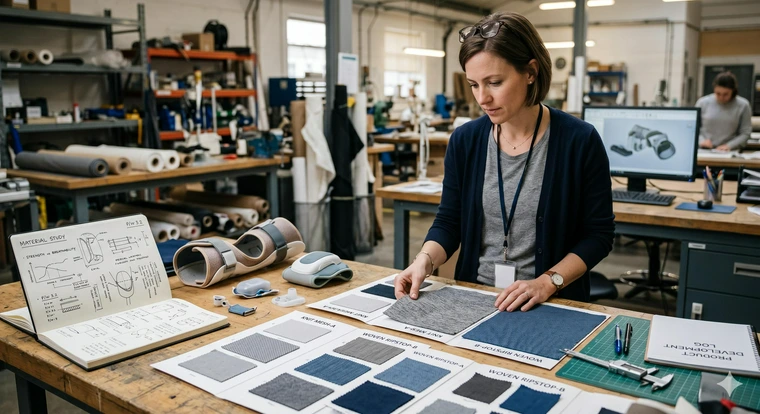
In some applications, both constructions appear in the same product. A medical transport bag might use a woven 600-denier polyester shell for structural integrity while incorporating a knit interior lining for instrument protection and surface compliance. Getting that combination right is a material engineering decision, not a stylistic one.
Conclusion: Making the Right Textile Choice
The difference between knit and woven fabric ultimately comes down to how yarns are assembled and what mechanical behavior that assembly produces. Knits flex; wovens hold. Knits breathe; wovens protect. Understanding those distinctions at the construction level — not just by touching a sample — is how engineers and procurement managers make material decisions that hold up in production and in the field.
At Fieldtex Cases, we work through these material decisions with every customer before a pattern is cut. Oursoft goods design and engineering process starts with the end-use requirements and works backward to the right fabric, construction, and finish for your application. If you’re developing a custom soft goods product and need to nail the material specification from the start, request a quote, and let’s build it right the first time.